get quote
Leave Your Message

China Top Stepper System Suppliers for Global Buyers?

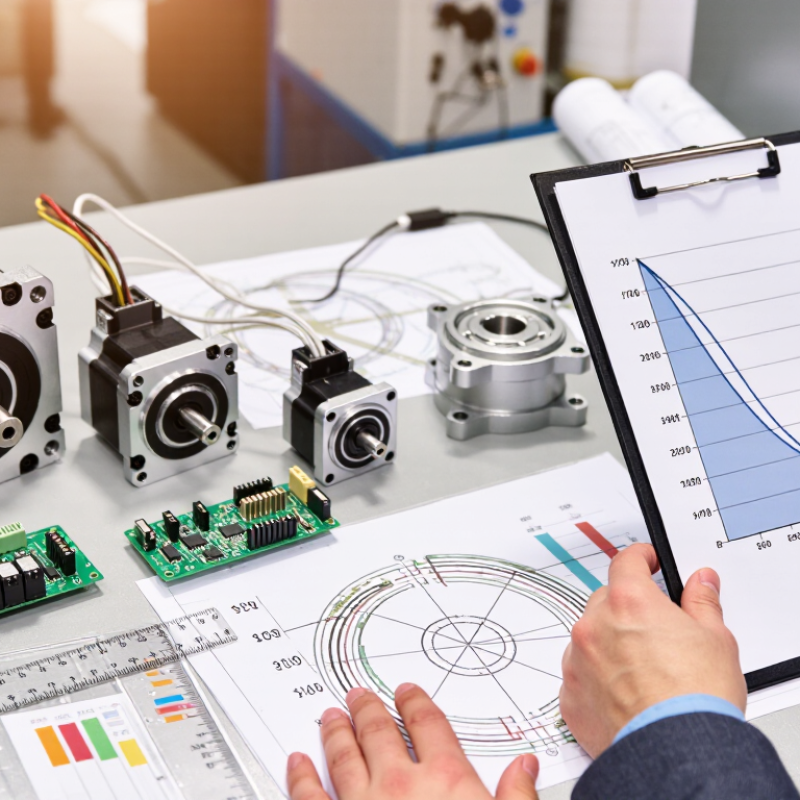
Global buyers evaluating China-based suppliers need more than a low unit price. A dependable Stepper System must match the machine’s load, speed range, duty cycle, and control method. A motor that looks strong on a catalog page may lose torque at operating speed. Ask for torque-speed curves, driver specifications, wiring diagrams, and clear test conditions. Small details matter.

P. P. Acarnley, author of Stepping Motors: A Guide to Theory and Practice, is a recognized technical authority in this field. The following is an editorial paraphrase of a core engineering principle, not a verified direct quotation: “Select the motor, driver, and mechanical load as one system.” That distinction can prevent costly surprises during integration. Buyers should also check sample availability, production consistency, communication speed, warranty terms, and the supplier’s ability to explain technical limits. Requesting a sample test with the intended controller and load is more useful than comparing headline torque alone.

This guide examines supplier capabilities, product range, customization, quality controls, and after-sales support. It does not assume that one company is best for every project. Some specifications may look complete yet leave important questions unanswered. Ask for evidence, compare like with like, and document the final requirements before placing an order.
China Top Stepper System Suppliers for Global Buyers?

Stepper System Fundamentals: 1.8° Motors Provide 200 Full Steps per Revolution

A 1.8° stepper motor divides one full revolution into 200 full steps. The calculation is simple: 360° divided by 1.8° equals 200. With a suitable driver, each command pulse requests one full step, giving engineers a clear starting point for motion planning. That is the baseline.

Real machines are less tidy. A small rotary table may show positioning differences when its load changes, the coupling flexes, or the motor approaches a resonant speed. The 200-step figure describes the motor’s nominal step angle, not guaranteed accuracy at the workpiece. That distinction matters.

Drivers can divide each full step into smaller microsteps, producing smoother motion at low speeds. Yet more microsteps do not automatically mean proportionally greater mechanical accuracy. Friction, load, assembly quality, and tuning still have an effect. A useful supplier discussion should cover the motor’s torque curve, driver compatibility, voltage, and intended speed. I would also ask how the system performs under the buyer’s actual load, not just on an unloaded bench. A short test can reveal things a specification sheet misses.
System Components: Stepper Motors, Drivers, Controllers, and Power Supplies

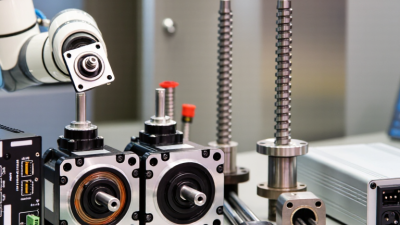
When comparing China-based stepper system suppliers, evaluate the motor, driver, controller, and power supply as one working set. A motor’s holding torque alone does not show how it will perform at speed. Check the torque curve, frame size, shaft details, and rated current. Small mismatches matter.

The driver must match the motor’s phase current and wiring configuration. Confirm its input-voltage range, microstepping options, and available protection features. A controller then translates motion commands into pulses and direction signals. Ask which communication interfaces and pulse rates it supports, and request clear wiring diagrams. Documentation saves time during installation.

The power supply should provide suitable voltage and enough current for the planned load. Do not select it from motor current figures alone; driver design and simultaneous motor operation affect system demand. Ask suppliers for component compatibility data and test results, then verify the setup under your actual load. A quiet bench test can be misleading. Cable length, acceleration, and mechanical resistance may change performance, and those details are easy to overlook.

Common NEMA frame designations are shown converted from inches to millimeters (1 inch = 25.4 mm). These are nominal designation values, not guaranteed motor-body measurements. When selecting a complete system, match the motor with a compatible driver, controller, and power supply, and confirm physical dimensions and electrical ratings in the component datasheets.

Supplier Comparison: Torque, Rated Current, Voltage, and Microstepping

When comparing stepper system suppliers, check torque at the speed your machine will actually use. Holding torque alone can look impressive, yet running torque often drops as speed rises. Ask for a torque-speed curve and the test conditions behind it. A compact feeder moving a loaded carriage needs different performance from a slow positioning table. Numbers without operating context are not enough.

Tips: Match rated motor current to the driver’s per-phase setting. Confirm supply voltage stays within the motor and driver limits. Request microstepping details, too.

Microstepping can make motion smoother and reduce vibration, but it does not guarantee matching increases in positional accuracy. Load, friction, and assembly alignment still matter. Compare rated current carefully: a higher figure is not automatically better if the driver cannot set it correctly or the motor runs hot. Check voltage compatibility across the complete system, not just the motor label. Ask suppliers to clarify units, test methods, and what is included in each quoted configuration. I would still verify one sample under a real load; paper specifications can miss an awkward resonance or a warm motor after sustained use.

Application Matching: CNC Machines, Robotics, Packaging, and 3D Printers

Stepper selection depends on motion profile, not just holding torque. CNC tool changers and auxiliary axes often need repeatable, low-speed positioning against changing loads. Robotics demand fast acceleration and predictable paths; for heavy arms or high speeds, compare steppers carefully with servo systems. Packaging machines commonly use steppers for film feed, labeling, and short indexing moves. 3D printers need steady motion over long runs, where motor heating and vibration can affect print quality. Fit matters more.

The International Federation of Robotics reported 541,302 industrial robot installations worldwide in 2023 in World Robotics 2024. That scale makes repeatability and duty-cycle testing important when selecting motion components for robotic equipment. Wohlers Report 2024 estimated that the additive manufacturing industry grew 11.1% in 2023, reaching $20.0 billion. This growth underscores the need to match printer motors to axis mass, belt tension, and sustained operating time. These figures describe broader markets, not stepper demand directly.

Tips: Check torque at operating speed, not only holding torque. Test the actual load, acceleration, and temperature. A missed step can spoil a print or shift a package label. It happens. Also verify driver compatibility, shaft dimensions, and available feedback; specifications alone may not capture real machine behavior.

China Top Stepper System Suppliers for Global Buyers? - Application Matching: CNC Machines, Robotics, Packaging, and 3D Printers

Application Typical Motion Requirements Common Stepper Motor Format Drive and Control Considerations Key Selection Checks
CNC Machines Coordinated axis movement, repeatable positioning, and adequate torque across the operating speed range. NEMA 23 or NEMA 34 are common frame-size options; the required size depends on axis mass, lead screw, and acceleration. Use a compatible stepper drive and motion controller. Confirm step-and-direction or the required fieldbus interface before ordering. Calculate axis force and torque; check screw pitch, supported speed, acceleration, thermal limits, and mechanical backlash.
Robotics Controlled movement across joints or linear axes, with attention to inertia, payload, and motion smoothness. Frame size varies by joint or axis; compact motors may suit light mechanisms, while larger frames may be needed for higher loads. Match the drive to the motor current and supply voltage. Confirm controller compatibility and whether feedback is required by the application. Evaluate reflected inertia, peak and holding torque, duty cycle, heat dissipation, and the consequences of missed steps.
Packaging Equipment Repeated indexing, synchronized feeding, and frequent starts and stops, often in a production environment. NEMA 17 or NEMA 23 may be suitable for lighter mechanisms; select based on conveyor, feeder, or indexing load. Check pulse-rate requirements, input signals, drive protection, and synchronization with sensors or other machine axes. Verify cycle rate, acceleration, positioning repeatability, environmental protection needs, and motor temperature at the intended duty cycle.
3D Printers Precise, frequent movement of print-head and build-platform axes, plus controlled filament feeding. NEMA 17 is widely used in desktop 3D printers; the motor specification should match the axis or extruder design. Confirm driver-current settings, microstepping compatibility, available supply voltage, and controller firmware support. Check required torque at operating speed, motor temperature, vibration, noise, belt or lead-screw compatibility, and extrusion performance.

Frame sizes and system requirements are application-dependent. Confirm motor, drive, controller, and mechanical specifications against the equipment design and the supplier’s current datasheets.

Global Buyer Checklist: Certifications, Lead Times, and After-Sales Support

Global buyers comparing China-based stepper system suppliers should check documents against the exact motor, driver, and power supply being quoted. A certificate for one component may not cover the complete system. Request current test reports, model numbers, and the intended destination-market approvals. Verify the issuing body independently. Ask for evidence.

The International Federation of Robotics reported 541,302 industrial robot installations worldwide in 2023, with Asia accounting for 70 percent. This signals a large automation market, not proof that any supplier meets your requirements.

Lead times need detail, not a single optimistic figure. Ask suppliers to separate sample preparation, production, inspection, and shipping estimates. Confirm which parts are stocked and which are made to order. Request written notice rules for delays and a realistic buffer for custom cables or connectors. A neat quotation can still hide uncertainty. That deserves scrutiny.

After-sales support should be measurable before payment. Agree on response hours, troubleshooting channels, warranty scope, and availability of replacement drivers and cables. Ask for wiring diagrams, parameter files, and a concise fault-finding guide. For evaluation, send the same load profile and duty cycle to each candidate, then compare test records and support answers. Some checklists miss the awkward part: who pays return freight when the fault is unclear? Spell it out.