get quote
Leave Your Message

China Top Stepper System Manufacturers and Suppliers

China’s stepper motor industry has become a major source of reliable motion-control components. Its manufacturers and suppliers serve robotics, packaging, medical equipment, CNC machines, 3D printers, and laboratory systems. However, choosing a suitable Stepper System requires more than comparing prices or browsing product catalogs.

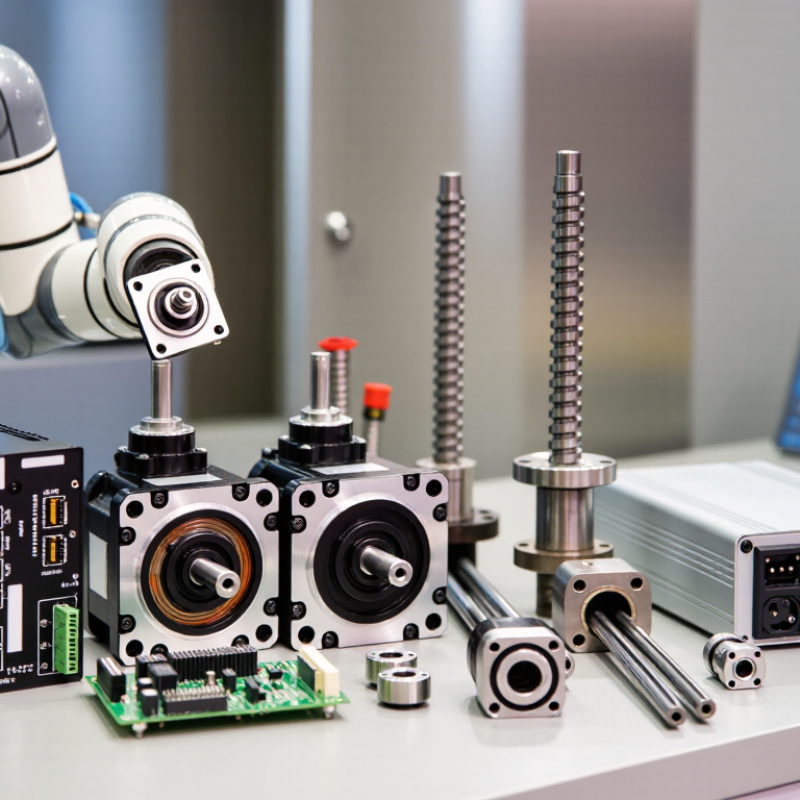
A Stepper System normally includes a motor, driver, controller, power supply, and suitable transmission parts. Each element affects positioning accuracy, heat, noise, and service life. As motion-control expert Dr. Dan Jones has stated, “A step motor is an incremental motion device.” This simple description highlights an important point: performance depends on coordinated movement, not the motor alone.

Experienced Chinese manufacturers often provide hybrid stepper motors, closed-loop systems, integrated drivers, and customized winding options. Strong suppliers can also support torque testing, insulation checks, vibration evaluation, and sample verification. Look for clear technical drawings, repeatable production records, responsive engineers, and dependable after-sales service. Certifications matter, but they should support practical evidence rather than replace it.

No supplier is perfect. A polished website cannot prove stable quality. Some low-cost systems may create unexpected heat, resonance, or missed steps during continuous operation. That is easy to overlook. Buyers should test the system under real load, speed, acceleration, and duty-cycle conditions. This guide examines China’s top Stepper System manufacturers and suppliers through product capability, engineering experience, customization, quality control, delivery performance, and long-term support. The comparison may not answer every application question, but it can provide a more realistic starting point for confident sourcing.
China Top Stepper System Manufacturers and Suppliers

What Is a Stepper System and How Does It Work?

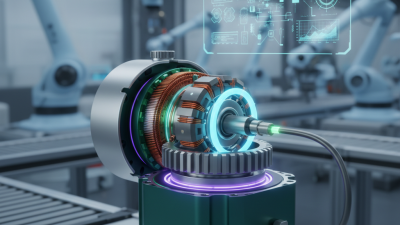
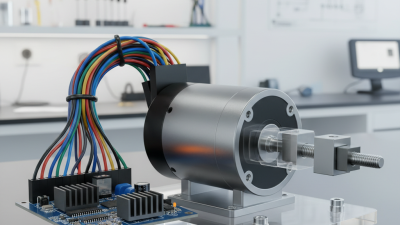
A stepper system converts electrical pulses into controlled mechanical movement. It usually includes a stepper motor, driver, controller, power supply, and suitable wiring. The motor contains coils and a toothed rotor. When the driver energizes the coils in sequence, magnetic fields pull the rotor toward precise positions. Each pulse represents a specific movement, called a step.

The controller sends pulse signals for position, direction, and speed. The driver then regulates current through each motor phase. Full-step operation provides strong movement, while microstepping creates smoother rotation and less vibration. However, microstepping does not always deliver equal positioning accuracy under heavy loads. This detail deserves careful attention.

A practical system must match motor torque with acceleration, load weight, friction, and travel speed. Engineers often test these conditions instead of trusting a simple specification sheet. Open-loop control is common because it remains affordable and straightforward. Yet missed steps can occur during sudden acceleration or mechanical blockage. Some applications add an encoder for feedback and error detection. I have found that heat, resonance, and poor cable routing can also reduce stability. The system may look correctly selected, but real machine testing can reveal uncomfortable gaps. A reliable supplier should provide torque curves, wiring guidance, driver settings, and clear testing data. Test it under load.
Key Features of China’s Stepper System Manufacturing Industry

China’s stepper system manufacturing industry combines motor production, drivers, controllers, and precision machining. This integrated structure can shorten development cycles and reduce sourcing complexity. Manufacturers commonly offer hybrid stepper motors, microstepping drivers, closed-loop options, and customized shaft designs. These solutions serve packaging, CNC equipment, medical instruments, and warehouse automation.

The International Federation of Robotics reported 276,288 industrial robot installations in China during 2023. This figure represented about 51% of global installations. Such automation demand supports stronger testing, faster delivery, and deeper motion-control expertise. However, production scale does not guarantee stable performance. Torque accuracy, heat control, vibration, and encoder feedback still require careful verification. Reports from MarketsandMarkets also identify rising demand for compact, energy-efficient motion systems. The data is useful, but forecasts can change with electronics prices and industrial investment.

Tips: Compare torque curves at operating speed, not only holding torque. Request noise, temperature-rise, and lifespan test records. Check whether the supplier validates complete motor-driver compatibility. A low price may hide tuning work. That mistake is common. Also review export documentation and after-sales response before ordering samples. Supplier capability can look impressive online, yet engineering support may remain limited.

Leading Types of Stepper System Manufacturers and Suppliers in China

China’s stepper system manufacturers and suppliers serve automation, packaging, medical equipment, and precision positioning markets. Their main product types include hybrid stepper systems, integrated motor-drive units, closed-loop stepper systems, and linear stepper actuators. Hybrid systems remain popular for their strong torque and simple control. Closed-loop models add encoder feedback, reducing missed-step risks during acceleration or heavy loading.

A 2024 market outlook from MarketsandMarkets estimates the global stepper motor market will grow from about USD 5 billion in 2024 to more than USD 7 billion by 2029. This growth supports China’s expanding supplier network, including component factories, system integrators, and export-focused distributors. Experienced suppliers usually provide torque curves, wiring diagrams, firmware support, and sample testing. However, product labels can be confusing. A “closed-loop” claim does not always indicate accurate positioning under every load. Buyers should test actual speed, heat, vibration, and repeatability.

Tips: Request a complete datasheet and a sample unit. Check rated current, holding torque, encoder resolution, and communication protocol. Ask how the supplier handles failed samples and production changes. ISO 9001 certification can support process consistency, but it cannot replace performance testing. For dusty equipment, inspect sealing details. For high-speed motion, compare acceleration limits rather than relying only on peak speed. A small pilot order is often wiser. Some suppliers may offer excellent prices, yet their documentation remains weak. That weakness deserves attention.

China Top Stepper System Manufacturers and Suppliers - Leading Types of Stepper System Manufacturers and Suppliers in China
Stepper System Type Basic Operating Principle Typical Motor Construction Common Resolution or Step Angle Feedback Configuration Main Advantages Common Applications Key Selection Factors
Open-Loop Stepper System The controller sends pulse commands to the motor without receiving position feedback. Two-phase or three-phase hybrid stepper motor with a toothed rotor and energized stator phases. 1.8° full step 0.9° available Microstepping can provide finer commanded motion. No encoder is required for normal operation. Simple control architecture, low system cost, easy installation, and reliable performance when correctly sized. 3D printers, desktop CNC machines, laboratory equipment, indexing mechanisms, and compact automation systems. Required torque, load inertia, acceleration, operating speed, supply voltage, and the risk of missed steps.
Closed-Loop Stepper System The drive uses encoder feedback to monitor rotor position and correct motion errors. Hybrid stepper motor paired with an incremental or absolute encoder and a feedback-capable drive. 1.8° common base step Encoder resolution depends on the selected feedback device. Encoder-based position and, in some systems, speed monitoring. Reduced risk of lost steps, improved positioning confidence, lower heat at light loads, and better overload response. Packaging equipment, pick-and-place machines, inspection systems, robotics axes, and precision motion platforms. Encoder resolution, control-loop performance, allowable positioning error, overload requirements, and communication interface.
Integrated Stepper System The motor, drive electronics, and sometimes the controller or network interface are combined in one housing. Hybrid stepper motor with an integrated digital drive; some versions include an encoder or brake. 1.8° common motor step Electronic microstepping is commonly supported. Open-loop or closed-loop, depending on the configuration. Compact wiring, reduced cabinet space, simplified commissioning, and fewer external components. Conveyor positioning, valve control, compact linear stages, labeling machines, and distributed automation. Thermal management, enclosure rating, network protocol, connector layout, available current, and installation space.
High-Torque Hybrid Stepper System Electromagnetic phase sequencing produces incremental rotary motion with high holding torque. Permanent-magnet or hybrid rotor with laminated stator and multiple toothed poles. 1.8° typical 0.9° precision option Usually open-loop; closed-loop versions are also available. High holding torque, good low-speed control, and broad availability in multiple frame sizes. CNC axes, material handling, textile machinery, medical equipment, and industrial indexing. Holding torque, pull-out torque, speed-torque curve, motor frame size, shaft design, and duty cycle.
Linear Stepper System Rotary stepper motion is converted into direct linear motion, or a linear motor produces incremental thrust directly. Captive or non-captive linear stepper actuator, or a linear stepper motor with a moving magnet or forcer. Defined by lead and step angle Linear travel per pulse depends on the screw or magnetic pitch. Open-loop or encoder-based closed-loop control. Direct linear positioning, compact design, repeatable incremental movement, and no external rotary-to-linear conversion in some designs. Small dispensing systems, optical instruments, laboratory automation, camera positioning, and medical devices. Linear force, travel length, speed, guide friction, backlash, mounting orientation, and required repeatability.
Geared Stepper System A gearbox reduces motor speed and increases output torque while changing the output motion ratio. Stepper motor combined with a planetary, spur, or other precision gearbox. Motor step angle remains fixed Output movement is reduced according to the gear ratio. Normally open-loop, with encoder options for higher positioning assurance. Higher output torque, improved low-speed resolution, and better load matching for demanding mechanisms. Robotic joints, camera mechanisms, actuators, access-control equipment, and compact positioning systems. Gear ratio, backlash, gearbox efficiency, permissible radial load, output torque, and service life.
Waterproof or Washdown Stepper System Stepper motion is provided by a motor and electrical assembly designed to resist moisture, dust, or cleaning exposure. Sealed stepper motor with protected connectors, shaft seals, and an enclosure selected for the environment. 1.8° or 0.9° common Final resolution depends on the drive and mechanical transmission. Open-loop or closed-loop depending on the machine requirement. Improved resistance to dust, splashing water, and routine cleaning when the specified enclosure rating is maintained. Food-processing equipment, packaging lines, outdoor instruments, chemical handling, and washdown machinery. IP or NEMA enclosure rating, connector sealing, corrosion resistance, cable routing, ambient temperature, and cleaning method.
Multi-Axis Stepper Control System A coordinated controller or multi-channel drive commands several stepper axes using synchronized pulse or network commands. Multiple stepper motors connected to individual or shared-axis drives. Configurable microstepping Axis resolution depends on motor step angle and mechanical transmission. Open-loop or mixed open-loop and closed-loop axis feedback. Coordinated motion, reduced control-panel wiring, scalable axis expansion, and simplified machine synchronization. Machine tools, automation cells, motion tables, dispensing equipment, and multi-axis inspection systems. Axis count, synchronization accuracy, pulse frequency, network protocol, controller capacity, and emergency-stop design.
Stepper Drive and Motor Package A matched motor-and-drive combination is selected to meet the required current, voltage, torque, and motion profile. Hybrid stepper motor matched with a digital constant-current drive. Full-step to microstep operation The actual usable resolution depends on mechanical stiffness and load conditions. Open-loop by default; encoder-equipped packages are available. Better electrical matching, easier commissioning, predictable performance, and simplified technical support. OEM machinery, retrofit projects, automated fixtures, laboratory equipment, and general industrial motion. Motor inductance, rated phase current, bus voltage, peak speed, acceleration profile, thermal limits, and controller compatibility.

How to Evaluate Chinese Stepper System Suppliers

Evaluating Chinese stepper system suppliers requires more than comparing unit prices. Grand View Research reported that the global stepper motor market reached about USD 5.1 billion in 2023. It also projects continued growth through 2030. This demand attracts capable factories and inexperienced traders. Verify whether the supplier designs motors, drivers, and controllers internally. Ask for torque-speed curves, winding data, temperature-rise results, and production traceability.

A reliable evaluation should combine documents with physical testing. Request samples from normal production, not specially prepared units. Test positioning accuracy, vibration, noise, heat, and stall behavior under your actual load. Review quality records against ISO 9001 procedures and check applicable IEC requirements. TÜV Rheinland’s 2023 industrial quality research emphasizes traceability and process control as key risk indicators. Still, certificates do not guarantee consistent batches. That assumption can be costly. Visit the facility, inspect calibration labels, and interview the technician responsible for final testing. Compare promised lead times with recent shipping records.

Tips: Build a weighted scorecard before negotiations. Give engineering performance more weight than price. Require a written corrective-action process for failed samples. Check at least three production batches. One batch proves very little. Also examine communication speed, spare-part availability, firmware control, and after-sales response. A supplier may appear strong during an audit yet struggle after volume increases. Leave room for doubt.

How to Evaluate Chinese Stepper System Suppliers

This chart presents a practical, non-brand-specific evaluation framework for comparing Chinese stepper system suppliers. The suggested weights emphasize technical performance, quality control, customization capability, delivery reliability, compliance documentation, and after-sales support. Buyers should verify each item through datasheets, samples, audit records, test reports, and contractual commitments.

Applications and Selection Factors for Stepper Systems

Stepper systems serve precise motion tasks in 3D printers, CNC equipment, packaging lines, laboratory instruments, and small robotic platforms. Their fixed step angles simplify positioning without complex feedback hardware. MarketsandMarkets valued the global stepper motor market at about USD 4.1 billion in 2023. Its report projects approximately USD 5.2 billion by 2028, supported by automation and medical equipment demand.

Application conditions should guide system selection. A packaging axis may need high holding torque at low speed. A miniature inspection stage may prioritize resolution and quiet operation. Check the required travel speed, acceleration, load inertia, duty cycle, and ambient temperature. The driver must match motor current and supply voltage. Closed-loop feedback can reduce missed-step risks, but it adds cost and tuning work. Do not select by torque alone.

Real commissioning often exposes overlooked details. A motor may meet the torque chart yet stall near resonance. I have seen flexible couplings create visible positioning errors. Belt tension, cable routing, and heat buildup matter. NEMA frame size is not a performance guarantee. The 2024 Grand View Research analysis also identifies industrial automation as a major growth area for stepper motors. For reliable sourcing, manufacturers and suppliers should provide torque-speed curves, thermal limits, wiring diagrams, test conditions, and traceable quality records. Datasheets can still be incomplete. Ask for measured data.