get quote
Leave Your Message

China Top Stepper System Manufacturers for Global Buyers

China’s stepper motor industry has become a practical sourcing option for global equipment manufacturers. Its factories serve robotics, packaging, medical devices, textile machines, and laboratory automation. The strongest suppliers do more than sell motors. They design complete Stepper System solutions, including drivers, controllers, gearboxes, cables, and technical support.

Professor Takashi Kenjo, a respected researcher and author in motor engineering, described the stepping motor as “a digital actuator.” This concise idea explains its value. Each electrical pulse can create a measured movement, making positioning easier to control. Yet accuracy depends on the entire system, not the motor alone. Driver quality, torque margins, resonance control, heat management, and software settings all matter.

Reliable Chinese manufacturers usually provide detailed torque curves, wiring diagrams, sample testing, and customization records. Buyers should examine these details closely. A polished catalog is not enough. Ask for repeatability data under realistic loads, including acceleration, stopping, and continuous operation. Visit the factory when possible. Watch how coils are wound, bearings are inspected, and finished units are tested.

Some purchasing decisions still focus too heavily on price. That can become expensive later. A cheaper motor may produce vibration, missed steps, or unstable performance. I have also seen specifications presented without clear test conditions. That weakness deserves attention. Global buyers should compare documented performance, communication quality, certifications, production capacity, and after-sales response. The best Stepper System partner is not always the largest manufacturer. It is the supplier that can prove consistent performance and respond clearly when real machines behave differently.
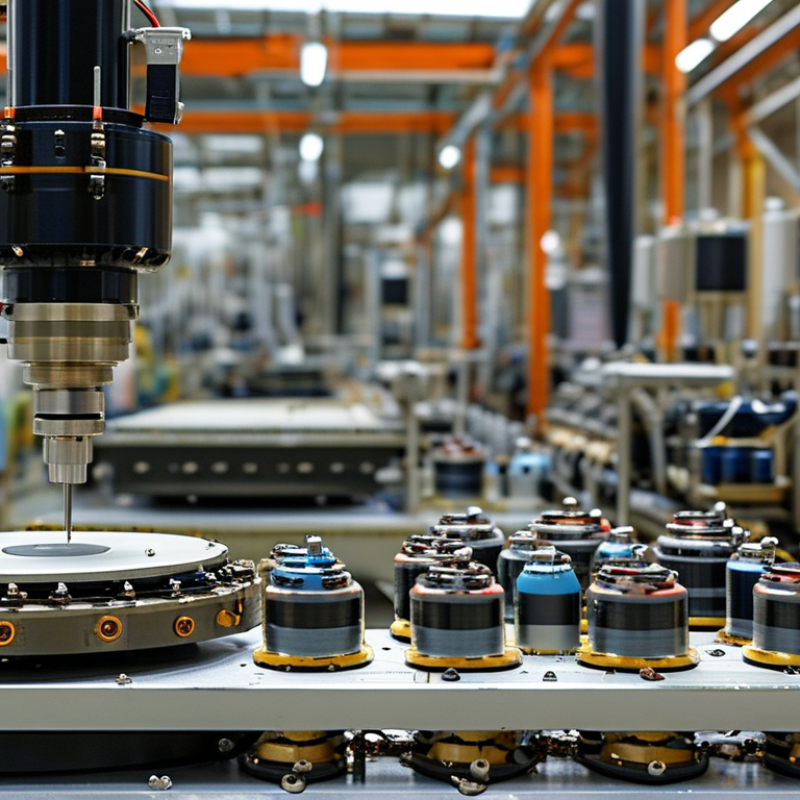
China Top Stepper System Manufacturers for Global Buyers

What Defines a Stepper System Manufacturer in China

A stepper system manufacturer in China is more than a motor supplier. It should design, match, test, and support the complete motion package. That package may include motors, drivers, controllers, cables, and software. Experienced engineers examine load torque, acceleration, duty cycle, and ambient temperature before suggesting a model. A capable factory can show test records, wiring diagrams, and sample results. Ask for them. Real expertise appears in details. For example, a production line may need stable positioning within 0.05 mm, not merely high holding torque. Manufacturers serving global buyers should understand voltage requirements, machine safety, export documents, and technical communication. Clear English manuals matter.

Tips: Request a sample system and test it under your actual load. Check noise, heat, missed steps, connector fit, and software response. Ask how failures are traced. A reliable manufacturer uses incoming inspection, process checks, and final testing. Serial numbers should connect each unit to production records. Certification claims need supporting documents, not attractive website language. Production capacity matters too, but large capacity alone proves little. Visit remotely if needed. Watch how engineers answer difficult questions. Silence can be informative.

Customization separates a capable system maker from a catalog reseller. Engineers may adjust current settings, shaft dimensions, firmware behavior, or mounting plates. Yet customization can create delays and hidden costs. No supplier is perfect. Even strong factories may miss a tolerance or explain a parameter poorly. Trial orders, acceptance criteria, and written change control remain essential. Buyers should compare response time, revision quality, and after-sales ownership, not just unit price. A manufacturer earns trust through repeatable evidence. Fancy promises are easy. Consistent performance is harder.
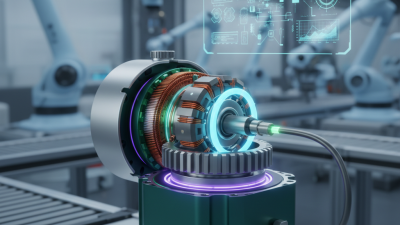
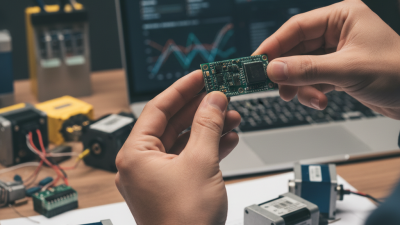
Key Types of Stepper Systems and Their Industrial Applications

Stepper systems combine a stepper motor, drive, controller, and mechanical load. Their main types include permanent magnet, variable reluctance, and hybrid designs. Hybrid stepper systems are widely used because they provide strong holding torque and precise positioning. They suit packaging machines, CNC equipment, laboratory automation, and compact robotic stages.

Permanent magnet systems offer simple construction and economical operation. They work well in light-duty feeders, valves, and small office machines. Variable reluctance motors respond quickly and tolerate demanding cycling conditions. However, their lower torque can limit performance under heavy loads. Engineers should check acceleration, duty cycle, shaft load, and ambient temperature before selecting a system.

Closed-loop stepper systems add encoder feedback to correct missed steps. This feature benefits conveyor positioning, printing equipment, inspection platforms, and medical production machinery. Open-loop systems remain practical where loads are predictable and costs must stay controlled. In actual factory projects, vibration often receives too little attention. Resonance may create noise, skipped motion, or poor surface quality. Microstepping can improve smoothness, but it does not automatically increase usable torque. A properly sized motor, matched drive, and rigid coupling matter more than specifications alone. I have seen designs fail because engineers trusted holding torque while ignoring acceleration torque. That mistake is easy to repeat. Temperature, dust, cable routing, and maintenance access also influence long-term reliability for global industrial buyers.

China Top Stepper System Manufacturers for Global Buyers - Key Types of Stepper Systems and Their Industrial Applications

Stepper System Type Operating Principle Typical Positioning Method Typical Torque / Speed Range Main Advantages Common Industrial Applications Key Selection Considerations
Open-Loop Stepper System The controller sends a predetermined number of electrical pulses to the motor. Position feedback is not normally used. Pulse and direction control; microstepping is commonly available. Approximately 0.05–20 N·m; best suited to low-to-moderate speeds, commonly below 1,000 rpm. Low cost Simple wiring High holding torque Easy integration 3D printers, laboratory instruments, small CNC machines, packaging mechanisms, indexing tables and general-purpose linear stages. Load inertia, acceleration, resonance, available voltage, required stopping accuracy and the risk of missed steps must be evaluated.
Closed-Loop Stepper System An encoder measures shaft position and the drive adjusts current to reduce position error and detect or correct lost motion. Pulse and direction, analogue command or networked motion control with encoder feedback. Approximately 0.2–30 N·m; commonly used from low speed to about 1,500 rpm, depending on motor size and load. Reduced risk of stall Higher dynamic response Lower heat at partial load Fault monitoring Robotic axes, automated inspection equipment, semiconductor handling, precision conveyors, medical automation and higher-duty CNC equipment. Encoder resolution, control-loop tuning, maximum speed, cable length, alarm functions and required continuous-duty performance are important.
Integrated Stepper Motor System The stepper motor, driver and often the controller or communication interface are combined in one housing. Pulse and direction, USB, RS-485, CANopen, EtherCAT or other networked control options may be available. Approximately 0.1–15 N·m; speed capability is typically application-dependent and may reach around 1,000 rpm. Compact installation Fewer external components Simplified commissioning Reduced cabling Compact automation modules, pick-and-place equipment, labeling systems, access mechanisms, laboratory automation and distributed machine axes. Thermal dissipation, connector protection, communication protocol, software compatibility, serviceability and available mounting space should be checked.
Linear Stepper System Rotary motion is converted into direct linear motion through a lead screw, nut, belt mechanism or a linear stepper motor arrangement. Incremental pulse control with linear travel per step determined by screw pitch or magnetic pole geometry. Typical thrust: approximately 10–2,000 N; typical travel speed: about 1–500 mm/s. Direct linear positioning Good repeatability Compact axial design No separate rotary-to-linear gearbox required Valve actuation, dosing pumps, camera focus systems, dispensing machines, laboratory stages, medical equipment and small material-handling systems. Thrust, screw lead, duty cycle, backlash, guide alignment, lubrication, travel length and vertical-load holding requirements must be considered.
High-Torque Hybrid Stepper System A toothed rotor and stator create precise magnetic alignment, combining permanent-magnet and variable-reluctance operating characteristics. Full-step, half-step or microstep control; commonly available in two-phase and three-phase configurations. Approximately 0.3–30 N·m; strong low-speed torque with usable performance commonly up to 600–1,500 rpm. High torque density Accurate incremental motion Strong holding torque Wide frame-size selection CNC routers, cutting machines, textile machinery, industrial printers, indexing equipment, conveyors and automated assembly equipment. Motor frame size, winding current, drive voltage, resonance control, acceleration profile and heat generation under continuous load are critical.
Geared Stepper System A gearbox reduces motor speed and increases output torque while improving the effective angular resolution at the output shaft. Pulse-based positioning with the gear ratio included in the motion calculation. Approximately 1–100 N·m output torque; typical output speed ranges from about 5–300 rpm. High output torque Low-speed control Improved load matching Compact motor option Rotary indexing tables, pan-and-tilt units, dosing valves, conveyor adjustment systems, positioning fixtures and low-speed actuators. Gear backlash, transmission efficiency, acoustic noise, lubrication, allowable radial load and required positioning repeatability should be assessed.
Servo-Stepper Hybrid System A stepper motor is operated with encoder feedback and servo-style current and position control to combine stepper torque characteristics with feedback regulation. Pulse and direction or real-time industrial network control with closed-loop feedback. Approximately 0.5–30 N·m; high-speed capability may reach about 1,500–3,000 rpm in suitable applications. High acceleration Low audible noise Overload detection Efficient current control High-speed labeling, packaging, electronic assembly, synchronized conveyors, automated inspection and multi-axis motion platforms. Feedback resolution, network cycle time, peak current, braking requirements, mechanical stiffness and the machine’s required contour accuracy should be verified.
Hollow-Shaft Stepper System The motor rotor includes a central bore, allowing cables, shafts, tubing or optical components to pass through the rotating axis. Pulse and direction or closed-loop motion control, depending on the integrated drive configuration. Approximately 0.2–15 N·m; commonly applied at low-to-moderate speeds up to about 1,000 rpm. Pass-through design Space saving Reduced external mechanisms Convenient rotary integration Rotary inspection systems, cable routing mechanisms, optical positioning, camera systems, winding equipment and compact rotary fixtures. Through-bore diameter, allowable axial and radial loads, rotor inertia, cable bending radius, sealing requirements and mounting rigidity are essential.

Engineering note: Torque and speed values are representative application ranges rather than universal ratings. Actual performance depends on motor frame size, winding design, drive voltage, current setting, microstepping, load inertia, acceleration, ambient temperature and mechanical transmission efficiency.

Leading Chinese Stepper System Manufacturers and Their Strengths

China Top Stepper System Manufacturers for Global Buyers

Leading Chinese stepper system manufacturers combine motor production, driver engineering, and control software under one roof. This structure can shorten development cycles for overseas buyers. It also supports practical customization, such as 42 mm frame motors, closed-loop feedback, or 24-volt cabinet systems. Engineers often adjust winding designs for different loads, speeds, and temperature limits. That matters in packaging machines, laboratory equipment, textile lines, and compact robotic devices.

Their manufacturing strength comes from dense supplier networks and repeatable production processes. A capable factory can use automated winding, rotor balancing, and end-of-line testing. Buyers should request torque curves, insulation ratings, noise data, and sample test records. Clear documentation shows more than a polished product page. It reveals how seriously the manufacturer handles engineering control. Ask for traceability on batches.

Cost efficiency is another advantage, but the lowest quotation deserves caution. Some suppliers offer excellent value, while others may reduce testing or after-sales support. That difference is easy to miss. Reliable manufacturers usually provide prototype samples, parameter guidance, export packaging, and responsive technical communication. They can also explain connector choices, pulse requirements, and mounting tolerances without vague promises. Still, no factory fits every project. A supplier strong in standard motors may struggle with high-speed positioning or unusual environmental conditions. Careful sampling remains necessary, even when the factory appears experienced.

How Global Buyers Can Compare Chinese Stepper System Suppliers

China Top Stepper System Manufacturers for Global Buyers

Global buyers should compare Chinese stepper system suppliers through evidence, not catalog claims. Request motor curves, torque data, driver settings, wiring diagrams, and test conditions. A 2.0 amp motor may perform differently at 24 volts and 48 volts. Test it loaded.

Check whether the supplier controls production or mainly resells components. Ask about winding inspection, rotor balancing, driver burn-in, and final noise testing. Request sample units from the same production line planned for mass orders. Compare positioning accuracy, heat rise, vibration, and missed steps after continuous operation. Numbers can mislead.

Reliable suppliers explain tolerances, delivery risks, and replacement procedures without avoiding difficult questions. Review factory photos, audit documents, quality records, and relevant compliance files. Confirm connector types and mounting dimensions before approving drawings. Communication speed also matters, especially when an engineering change affects shipment timing. Keep records.

A useful comparison table should include unit price, sample cost, tooling fees, minimum order quantity, lead time, warranty terms, and technical support. Do not select the lowest quote too quickly. An inexpensive system may require extra tuning, stronger cooling, or redesign work later. Some suppliers offer excellent samples but inconsistent batch quality. That possibility deserves a production inspection plan and clear acceptance criteria. Mistakes happen, even with careful sourcing. The important point is whether the supplier admits them and provides measurable corrective action.

China Top Stepper System Manufacturers for Global Buyers

How Global Buyers Can Compare Chinese Stepper System Suppliers

When comparing Chinese stepper system suppliers, buyers should first match products by the same motor frame size. The chart shows common NEMA stepper motor frame widths: NEMA 17 is approximately 42 mm, NEMA 23 is approximately 57 mm, and NEMA 34 is approximately 86 mm. After confirming the frame size, compare torque, rated current, voltage, encoder options, driver functions, certifications, lead time, and long-term support.

Quality, Certification, Customization, and Export Support Factors

China’s top stepper system manufacturers increasingly serve global automation buyers with more than competitive pricing. The International Federation of Robotics reported 541,302 industrial robots were installed worldwide in 2023. This growth raises expectations for accurate motion control, stable drivers, and documented quality processes.

Quality should begin with traceable components, incoming inspection, and repeated load testing. Ask for torque curves, thermal data, positioning accuracy, and life-test records. ISO 9001 supports process consistency, while CE, RoHS, EMC, or UL-related documentation may suit different markets. Certification is not decoration. A certificate alone cannot prove reliable field performance. Factory audits, sample testing, and batch records provide stronger evidence. Small details matter.

Customization remains important for packaging machines, medical equipment, laboratory devices, and compact robotics. Manufacturers should support motor size, winding, encoder feedback, voltage, connector, firmware, and mounting changes. According to MarketsandMarkets, the industrial automation market is projected to grow from about USD 205.9 billion in 2024 to USD 395.1 billion by 2029. That expansion increases demand for adaptable motion systems. Yet customization can create supply risks. Buyers should confirm engineering ownership, approval samples, revision control, and spare-part availability before volume orders.

Export support also deserves close review. Reliable suppliers provide commercial invoices, packing lists, HS codes, manuals, wiring diagrams, and destination-specific compliance files. Clear lead times help, but actual shipping performance may vary. This is where many evaluations become too optimistic. A practical supplier should explain limitations, not hide them. Salvaging a poor installation is expensive. 马会