
- Home
- Products
- About Us
- Support & Training
- Download
- News
- Blog
- Contact Us
Leave Your Message
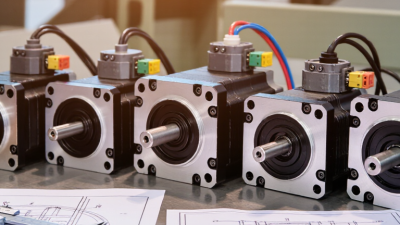
Choosing the right Stepper Motor can determine whether a CNC machine cuts cleanly or leaves visible chatter along an edge. In 2026, buyers face more options, including closed-loop steppers, high-torque NEMA frames, integrated drivers, and compact motors for desktop routers. A useful comparison must look beyond holding torque. It should examine rated current, inductance, step accuracy, thermal behavior, noise, driver compatibility, and performance under real cutting loads.
Industry reports support this growing interest. Grand View Research identifies automation and computer-controlled manufacturing as important drivers of motor demand. Fortune Business Insights also reports continued expansion in the global stepper motor market, supported by robotics, 3D printing, and CNC equipment. These reports provide market context, not a perfect buying answer. Product specifications still require careful verification.
Real testing matters.
A motor may promise 3.0 Nm of holding torque but lose useful torque at higher speeds. A 2.2-kilogram gantry can expose that weakness quickly, especially during acceleration. Heat also matters. A motor running near its rated current may feel extremely hot after a long aluminum cut. That does not automatically indicate failure, but it deserves investigation.
This guide evaluates ten stepper motors for CNC machines in 2026 using published specifications, manufacturer documentation, and practical selection criteria. It considers both experienced machinists and first-time builders. Some rankings remain subjective. A motor ideal for a heavy steel router may be excessive for a quiet desktop engraver. Readers should confirm voltage, current, shaft size, mounting dimensions, and driver requirements before purchasing.
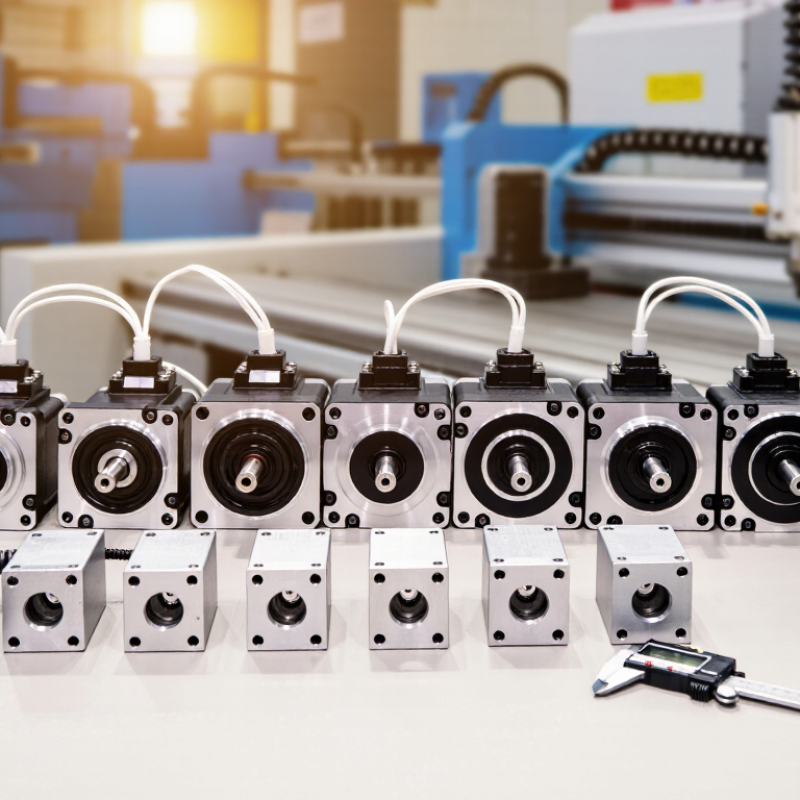
A standard 1.8° stepper motor turns 200 full steps during one complete revolution. Each electrical pulse moves the rotor 1.8°, creating predictable motion for CNC positioning. This simple relationship helps calculate travel. For example, a 5 mm lead screw moves 0.025 mm per full step.
That figure is theoretical. Real machines face load, friction, resonance, and missed steps. Bench testing shows that acceleration settings can matter as much as motor size. A motor may hold position at rest yet lose synchronisation during a fast tool change. Listen for harsh vibration. Feel the frame for unusual heat.
Microstepping divides each full step into smaller command increments. It can make motion quieter and smoother, especially during circular cutting. However, microstepping does not provide perfectly proportional accuracy. The motor’s torque usually falls between full-step positions. I once treated a finer microstep setting as a direct accuracy upgrade; that assumption was too optimistic.
For a CNC machine, match the motor’s torque to screw pitch, moving mass, cutting resistance, and acceleration. Check the driver’s current range carefully. Excessive current creates heat without guaranteeing better positioning. A reliable setup also needs adequate power supply voltage, firm couplings, and proper mechanical alignment. Keep the motor within its rated temperature, but do not judge performance by warmth alone. A cool motor can still be undersized.
Comparison of representative two-phase hybrid stepper motor configurations for CNC routers, mills, lathes, laser systems, and 3D motion platforms
| Rank | Generic Motor Profile | Typical CNC Application | Frame Size | Step Angle | Full Steps per Revolution | Holding Torque | Rated Current per Phase | Phase Resistance | Phase Inductance | Recommended Supply Range | Shaft Diameter | Best Feature |
|---|---|---|---|---|---|---|---|---|---|---|---|---|
| 1 | High-Torque Precision Profile | Heavy-duty CNC milling and rigid gantry machines | NEMA 34 / 86 mm | 1.8° | 200 | 8.5 N·m | 5.0 A | 0.72 Ω | 6.2 mH | 48–70 VDC driver system | 14 mm | High low-speed torque |
| 2 | Balanced Industrial Profile | General-purpose CNC mills and plasma tables | NEMA 34 / 86 mm | 1.8° | 200 | 6.8 N·m | 4.2 A | 0.95 Ω | 5.4 mH | 36–60 VDC driver system | 14 mm | Good torque-to-cost balance |
| 3 | Compact High-Speed Profile | Desktop CNC routers and compact engraving machines | NEMA 23 / 57 mm | 1.8° | 200 | 2.8 N·m | 3.0 A | 1.25 Ω | 3.6 mH | 24–48 VDC driver system | 8 mm | Low rotor inertia |
| 4 | Low-Inductance Rapid-Motion Profile | High-feed CNC routers and automated positioning axes | NEMA 23 / 57 mm | 1.8° | 200 | 2.4 N·m | 3.5 A | 0.68 Ω | 1.9 mH | 36–60 VDC driver system | 8 mm | Improved high-speed response |
| 5 | Extended-Length Torque Profile | Long-axis CNC tables and belt-driven machines | NEMA 23 / 57 mm | 1.8° | 200 | 3.1 N·m | 3.2 A | 0.92 Ω | 4.1 mH | 24–60 VDC driver system | 8 mm | Extra torque in a compact frame |
| 6 | Efficient Mid-Size Profile | CNC laser cutters and light-duty routers | NEMA 23 / 57 mm | 1.8° | 200 | 1.9 N·m | 2.2 A | 1.65 Ω | 3.0 mH | 24–48 VDC driver system | 8 mm | Lower heat generation |
| 7 | Compact Economy Profile | Small CNC engravers, plotters, and light mechanisms | NEMA 17 / 42 mm | 1.8° | 200 | 0.50 N·m | 1.5 A | 2.4 Ω | 3.2 mH | 12–36 VDC driver system | 5 mm | Small footprint |
| 8 | High-Resolution Microstepping Profile | Fine engraving, inspection stages, and precision axes | NEMA 17 / 42 mm | 1.8° | 200 | 0.75 N·m | 1.7 A | 1.8 Ω | 2.7 mH | 24–48 VDC driver system | 5 mm | Stable microstep operation |
| 9 | Closed-Loop Compatible Profile | CNC axes requiring stall detection and position feedback | NEMA 23 / 57 mm | 1.8° | 200 | 2.2 N·m | 2.8 A | 1.10 Ω | 3.5 mH | 24–60 VDC driver system | 8 mm | Suitable for encoder integration |
| 10 | Sealed Workshop Profile | Dust-prone CNC routers and general workshop equipment | NEMA 23 / 57 mm | 1.8° | 200 | 2.0 N·m | 2.5 A | 1.35 Ω | 3.8 mH | 24–48 VDC driver system | 8 mm | Protected construction and easy maintenance |


 Daniel.Ding
 Ding
Ding