Top 10 Benefits of Using Stepper Motors in Industry?
In the world of industrial automation, "Stepper Motors" have become a cornerstone technology. Expert Dr. James Anderson, a leading figure in motion control systems, once remarked, "Stepper motors offer unparalleled precision in a variety of applications." This precision is a key reason why many industries are embracing stepper motor technology.
Industries rely on stepper motors for their efficiency and reliability. They enable accurate positioning and repeatable movements in manufacturing processes. These motors find applications in robotics, CNC machines, and 3D printers. The ability to control speed and position without feedback mechanisms makes them invaluable. However, there's room for improvement in torque performance at high speeds.
Considering their numerous advantages, it's essential to evaluate the specific needs of your operation. Not every application will benefit equally from stepper motors. Reflecting on their pros and cons can guide decision-makers toward the best solutions in automation.
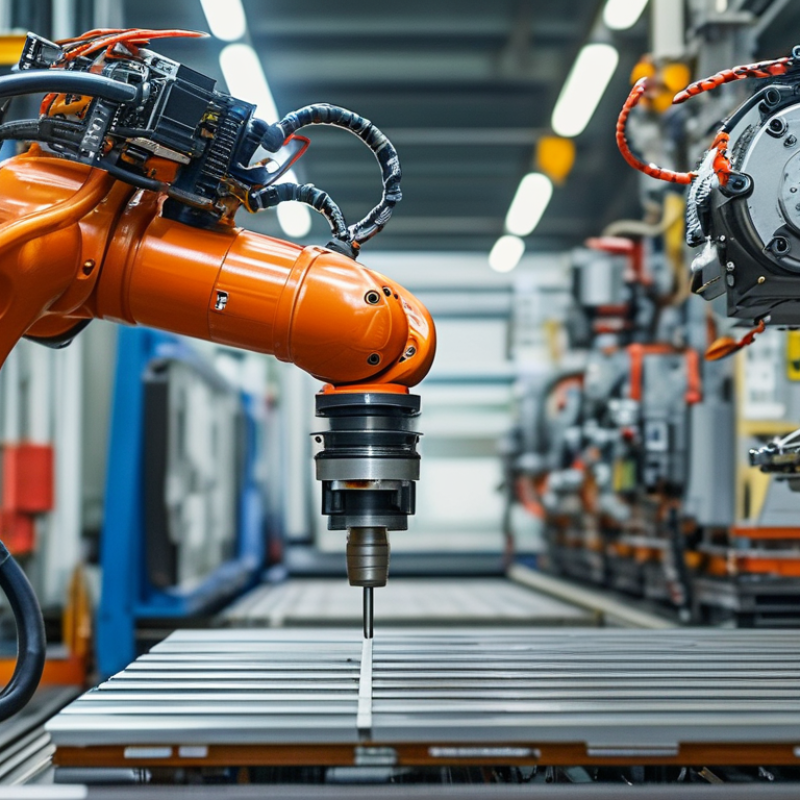
Advantages of Precision Control in Motion Applications with Stepper Motors
Stepper motors play a crucial role in the industrial landscape, particularly when precision control is essential in motion applications. According to a report by Allied Market Research, the global stepper motor market reached $3.89 billion in 2020 and is expected to grow significantly. This growth reflects the increasing demand for precise control systems in automation and robotics. Stepper motors offer accurate positioning and repeatability, essential for assembly lines and CNC machinery.
Precision control enables smoother operations and enhances product quality. In applications like 3D printing, stepper motors can achieve positioning accuracy of up to 0.1 mm. This high level of precision minimizes errors, reducing material waste and production costs. Moreover, stepper motors are open-loop systems, meaning they do not require complex feedback systems. This feature simplifies control and maintenance, making them an attractive choice for many industries.
However, stepper motors are not without challenges. They can experience torque drop-off at higher speeds, which may affect performance. Additionally, their performance can be temperature-sensitive, requiring careful monitoring. Despite these limitations, the advantages they offer in precision control make them invaluable in various applications, paving the way for advancements in automation technology.
Enhanced Reliability and Durability Compared to Other Motor Types
Stepper motors offer enhanced reliability and durability, making them a popular choice in industrial applications. These motors excel in precision control without the need for complex feedback systems. They effectively handle varying loads and provide consistent performance over time. This reliability is crucial in manufacturing settings where downtime can lead to significant losses.
In terms of durability, stepper motors are designed to withstand challenging environments. They resist dust, moisture, and temperature fluctuations better than many other motor types. However, while stepper motors are robust, they are not invincible. They can experience wear with excessive use or improper handling. Regular maintenance can mitigate these risks, ensuring long-term efficiency.
The design of stepper motors contributes to their reliability. They use a simple construction that minimizes failure points. This makes them easier to troubleshoot and replace when necessary. Despite their advantages, careful selection for specific tasks is essential. Not every application fits the strengths of stepper motors. Understanding their limitations can prevent potential issues, leading to more effective use in industry.
Top 10 Benefits of Using Stepper Motors in Industry
Energy Efficiency and Cost Savings in Industrial Operations
Stepper motors have become a go-to choice in various industrial applications due to their energy efficiency. Their design allows for precise control of movement without continuous power consumption. This translates into significant energy savings during operation. With their ability to operate in incremental steps, they reduce the risk of wasted energy, particularly in tasks requiring high accuracy.
Businesses looking to cut operational costs find stepper motors beneficial. By utilizing these motors, companies can minimize energy bills while increasing productivity. The efficiency achieved often allows for smaller drivers and lower heat generation. However, it's essential to assess whether stepper motors suit all applications, as their performance may not match that of other motor types in specific high-torque situations.
Understanding the operational environment is critical. While stepper motors excel in controlled conditions, they may struggle with load fluctuations. Complex systems might require additional consideration to maintain efficiency. Balancing performance and energy usage can be challenging, but adapting stepper motors for the right tasks enhances overall effectiveness. Many industries have seen positive impacts by integrating these motors, but awareness of their limitations is essential for continued success.
Versatility and Adaptability in Varied Industrial Environments
Stepper motors are becoming increasingly vital in various industrial settings. Their versatility allows for precise control in applications ranging from robotics to CNC machines. According to a recent industry report, stepper motors can achieve an accuracy of 1.8 degrees per step. This precision suits applications requiring meticulous movements.
In environments where adaptability is essential, stepper motors excel. They can operate under varying loads and speed conditions, making them suitable for automated assembly lines. A study shows that manufacturers utilizing stepper motors report a 25% increase in efficiency. However, these motors can face challenges with heat dissipation under heavy loads.
Industry data reveals that stepper motors are used extensively in 70% of automated systems today. Their ability to function without complex feedback devices enhances system reliability. Yet, it’s important to monitor performance regularly, as improper handling may lead to missed steps. Balancing these factors will ultimately leverage the benefits these motors provide in diverse industrial applications.
Top 10 Benefits of Using Stepper Motors in Industry
| Benefit |
Description |
| Precision Control |
Stepper motors offer precise positioning and repeatability, making them ideal for applications requiring accuracy. |
| Cost-Effectiveness |
They provide a low-cost solution for many applications compared to other motor types, especially in low to moderate torque requirements. |
| Simple Control |
Stepper motors can be easily controlled by simple digital signals, making them user-friendly for automation systems. |
| High Torque at Low Speeds |
They provide high torque at low speeds, which is beneficial for precise movement in various applications. |
| Robustness |
Stepper motors are durable and can operate in harsh industrial environments, ensuring longevity and reliability. |
| Open Loop Control |
They can operate efficiently without the need for feedback systems, reducing complexity and cost in many applications. |
| Versatility |
Stepper motors can be used in a variety of applications across different industries, from CNC machines to 3D printers. |
| Customization |
They are available in various sizes and specifications, allowing customization for specific industrial needs. |
| Energy Efficiency |
Stepper motors consume power only when moving, leading to lower energy costs over time. |
| Low Maintenance |
With fewer moving parts compared to traditional motors, stepper motors require less maintenance, resulting in reduced downtime. |
Simplified Integration and Programming for Automation Systems
Stepper motors have become a vital component in automation systems due to their simplified integration and programming capabilities. Their design allows for precise control of position, speed, and torque, making them ideal for various applications. Integration is often smoother than with traditional motors, as stepper motors typically operate using a straightforward pulse command system. This means that engineers can develop systems faster and with less complexity.
Programming stepper motors is also accessible. Many control platforms now offer user-friendly interfaces. This allows for rapid prototyping and development, reducing the time from concept to deployment. Engineers can easily adjust parameters, such as step resolution and speed, in real-time. However, not everyone finds this straightforward. Some users still struggle with tuning and setup. This can lead to challenges, particularly when integrating into existing systems or coordinating multiple motors.
The reliability of stepper motors enhances their appeal. They can maintain performance over prolonged use without significant wear. However, potential heating issues in high-torque applications must be considered. Users may need to rethink cooling solutions in these scenarios. Balancing complexity and optimization remains an ongoing challenge for many in the industry.



 Daniel.Ding
 Ding
Ding