
- Home
- Products
- About Us
- Support & Training
- Download
- News
- Blog
- Contact Us
Leave Your Message
Choosing the right Stepper Drive for global sourcing is not a simple catalog exercise. It requires practical testing, careful specifications, and honest supplier evaluation. A drive that performs well on a clean laboratory bench may behave differently inside a hot machine cabinet in Southeast Asia or Eastern Europe.
Dr. Takashi Kenjo, a respected authority on stepping-motor technology, described the operating principle clearly: “A stepping motor rotates in discrete angular steps.” The drive must control those steps reliably. Check motor current, supply voltage, microstepping resolution, pulse frequency, protection functions, and heat dissipation. Small details matter. A loose terminal can stop production.
Global buyers should also examine documentation, firmware stability, communication interfaces, certifications, warranty terms, and replacement availability. Ask suppliers for torque-speed curves under realistic loads. Request sample units before approving a large order. Compare test results, not only prices.
A low-cost Stepper Drive can become expensive when tuning takes weeks. Yet premium pricing does not always guarantee better motion. That assumption deserves scrutiny. I have seen specifications look impressive while thermal performance remained unclear. Supplier responsiveness also matters. Can the technical team explain a fault code at 2 a.m.? Perhaps not every vendor can.
Reliable sourcing depends on repeatable evidence. Test the drive with the intended motor, cable length, controller, and load. Record vibration, temperature, missed steps, and startup behavior. Review the findings with engineering and procurement together. The right choice is not merely the drive with the highest rating. It is the one that delivers stable motion, documented quality, and practical support across the product’s global service life.
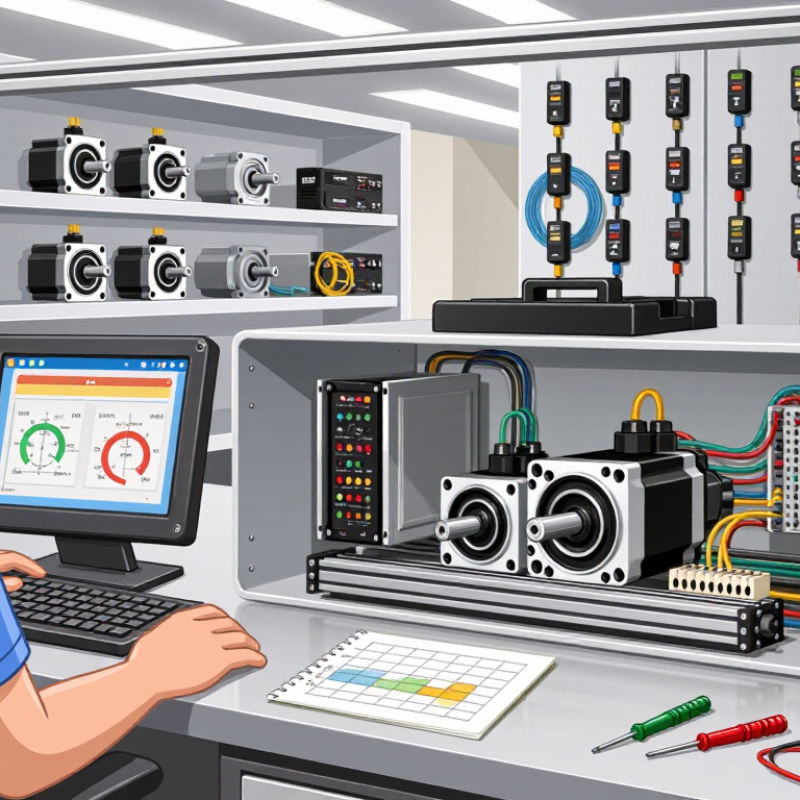
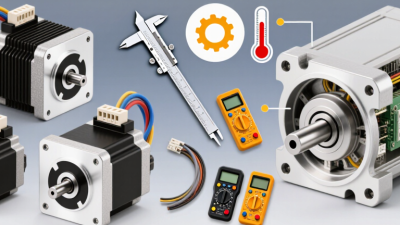
Choosing a stepper drive for global sourcing starts with understanding its operating type, not its catalog appearance. An open-loop drive receives pulse and direction signals from a controller. It regulates coil current, then energizes motor phases in sequence. The rotor follows the magnetic field in defined steps.
Microstepping divides each full step into smaller positions. This can reduce vibration and improve movement smoothness, although it does not create unlimited accuracy. A closed-loop stepper drive adds an encoder and checks rotor position during operation. If the motor falls behind, the drive can adjust current or report an error. Integrated drives combine the motor, drive electronics, and sometimes communication functions. They save cabinet space but may require more careful replacement planning.
Tips: Match the drive’s rated current to the motor’s phase current. Check supply voltage, pulse frequency, connector standards, and control compatibility before ordering samples. Test acceleration, load changes, and heat buildup in a real mechanism. Datasheet torque curves matter more than holding torque alone. Very small microsteps may look impressive, but mechanical stiffness can limit their value.
In sourcing work, I have seen apparently compatible drives behave differently under long cables and rapid reversals. That detail is easy to miss. Resonance, electrical noise, and poor grounding can weaken performance. No selection method is perfect. Leave room for testing, documentation review, and one uncomfortable design question: what happens when the motor loses position?
| Drive Type | Core Operating Principle | Typical Motor Compatibility | Typical Supply Range | Control Interface | Positioning Capability | Main Advantages | Best-Fit Applications |
|---|---|---|---|---|---|---|---|
| Constant-Voltage Drive | Applies switched voltage to motor windings. External resistance is commonly used to limit current, while the motor winding inductance shapes the current waveform. | Small two-phase permanent-magnet or hybrid stepper motors with relatively low current requirements. | Commonly low-voltage DC systems, often below 24 VDC; the exact value depends on the motor and external current-limiting design. | Step and direction signals, or direct phase switching in simple control systems. | Full-step operation is typical; microstepping is generally unavailable or limited. | Low cost Simple circuit and easy integration for basic motion. |
Small indicators, simple positioning mechanisms, educational equipment, and low-speed devices. |
| Constant-Current Chopper Drive | Measures winding current and rapidly switches the supply on and off to maintain a programmed current level. The chopper frequency controls the average winding current. | Two-phase or three-phase hybrid stepper motors, including many NEMA-frame motors. | Often 12–48 VDC, with industrial versions available at higher DC bus voltages subject to motor and drive ratings. | Step and direction, pulse and direction, or controller-specific bus commands. | Full-step, half-step, and selectable microstepping are commonly available. | Balanced performance Better high-speed torque, improved efficiency, and broad motor compatibility. |
Packaging equipment, laboratory automation, small CNC systems, actuators, and general industrial positioning. |
| Bipolar H-Bridge Drive | Uses H-bridge switching stages to reverse current through each motor phase. Current can be regulated independently in both directions. | Four-wire bipolar hybrid stepper motors; some six-wire motors can also be connected in bipolar configurations. | Typically 12–48 VDC for compact and mid-range systems. | Step and direction, with optional enable and fault signals. | Full-step, half-step, and microstepping depend on the control electronics and firmware. | Uses the full winding effectively, provides strong low-speed torque, and supports precise current control. | Robotics, 3D printers, inspection equipment, valve actuation, and compact motion platforms. |
| Unipolar Drive | Switches current through selected half-windings. The center tap of a six- or eight-wire motor allows simpler switching because current polarity in each half-winding does not need to reverse. | Six-wire or eight-wire unipolar-compatible stepper motors. | Usually low-voltage DC, commonly 5–24 VDC. | Parallel phase inputs, transistor control, or step and direction through an external controller. | Full-step and half-step operation are common; advanced microstepping is less common. | Simple power stage, straightforward control, and low component count. | Legacy equipment, low-cost mechanisms, small instruments, and applications where compact electronics are prioritized. |
| Microstepping Drive | Regulates the phase currents as near-sinusoidal waveforms so the magnetic field moves through intermediate positions between full steps. | Two-phase hybrid stepper motors, provided the motor current and inductance match the drive rating. | Commonly 12–60 VDC, depending on required speed, torque, and drive size. | Step and direction pulses; microstep resolution is selected by hardware switches, software, or fieldbus parameters. | Typical settings range from half-step to 1/256-step or higher; commanded resolution does not guarantee equal mechanical accuracy. | Lower vibration and audible noise, smoother motion, and reduced resonance in suitable operating ranges. | Camera stages, medical automation, dispensing systems, laboratory instruments, and precision slides. |
| Closed-Loop Stepper Drive | Uses an encoder or position sensor to compare commanded and actual rotor position. The drive adjusts phase current and can report following error or stall conditions. | Stepper motors equipped with a compatible incremental or absolute encoder. | Commonly 24–80 VDC, depending on motor size and required dynamic performance. | Step and direction, analog commands, CAN-based communication, RS-485, or an industrial fieldbus. | Closed-loop correction improves position retention and reduces the risk of undetected step loss; final accuracy still depends on mechanics and encoder resolution. | Higher reliability Reduced risk of missed steps, lower idle heating, and better load response than open-loop operation. |
High-duty automation, pick-and-place machines, inspection axes, textile equipment, and loads with changing inertia. |
| Integrated Motor Drive | Combines the stepper motor, drive electronics, and sometimes an encoder or controller in one housing. The drive regulates phase current locally. | Purpose-built two-phase or closed-loop stepper motor assemblies. | Commonly 24–48 VDC; some systems use other voltages according to the integrated assembly specification. | Step and direction, RS-485, CAN, Ethernet-based protocols, or other network interfaces. | Open-loop or closed-loop, depending on whether an encoder is included. | Reduced wiring, compact installation, lower panel space requirements, and simplified sourcing of matched components. | Distributed automation, AGV subsystems, conveyor modules, compact robots, and multi-axis machine designs. |
| AC-Input Stepper Drive | Converts an AC input into a controlled DC bus, then uses a regulated current-output inverter to energize the stepper motor phases. | Medium- and high-power hybrid stepper motors with voltage and current ratings compatible with the drive. | Single-phase or three-phase AC input, commonly around 100–240 VAC; exact limits vary by design and region. | Step and direction, analog control, or industrial network communication. | Full-step through microstepping; closed-loop options may be available. | Suitable for higher power levels, reduced dependence on a separate DC power supply, and longer cable runs in some installations. | Industrial machinery, larger indexing tables, machine tools, and factory automation equipment. |
| Multi-Axis Stepper Controller/Drive | Provides coordinated motion control and multiple power stages in one unit, with each axis regulating its assigned motor phase currents. | Multiple two-phase or three-phase stepper motors, subject to per-axis current and voltage limits. | Often 24–48 VDC for compact multi-axis systems; higher-voltage variants are also available. | USB, Ethernet, RS-485, CAN, pulse inputs, or programmable motion commands. | Independent or synchronized full-step and microstepping profiles across several axes. | Coordinated motion, fewer components, simplified panel wiring, and centralized diagnostics. | XY stages, small CNC machines, laboratory automation, indexing systems, and automated assembly equipment. |



 Daniel.Ding
 Ding
Ding