10 Best Stepper System Solutions For Optimal Performance?
In today’s fast-paced technological landscape, the choice of a Stepper System is critical. These systems play a vital role in various applications, from robotics to industrial automation. They provide precision and control, which are essential for optimal performance. However, not all stepper systems are created equal. Choosing the wrong one can lead to inefficiencies and wasted resources.
Exploring the best stepper system solutions can feel overwhelming. There are countless options available, each claiming to be the best. This complexity makes decision-making challenging. It’s important to identify systems that not only meet specifications but also align with project goals. Some solutions might seem appealing but may lack reliability in critical moments. Testing and understanding different systems are crucial for making informed choices.
Performance isn’t just about speed; it’s also about accuracy. An effective Stepper System can enhance productivity significantly. However, overlooking finer details may hinder progress. Striking a balance between cost and performance requires careful reflection. Recognizing the unique strengths and weaknesses of each solution can lead to better outcomes. In this article, we will delve into the top choices available for optimal stepper system performance.
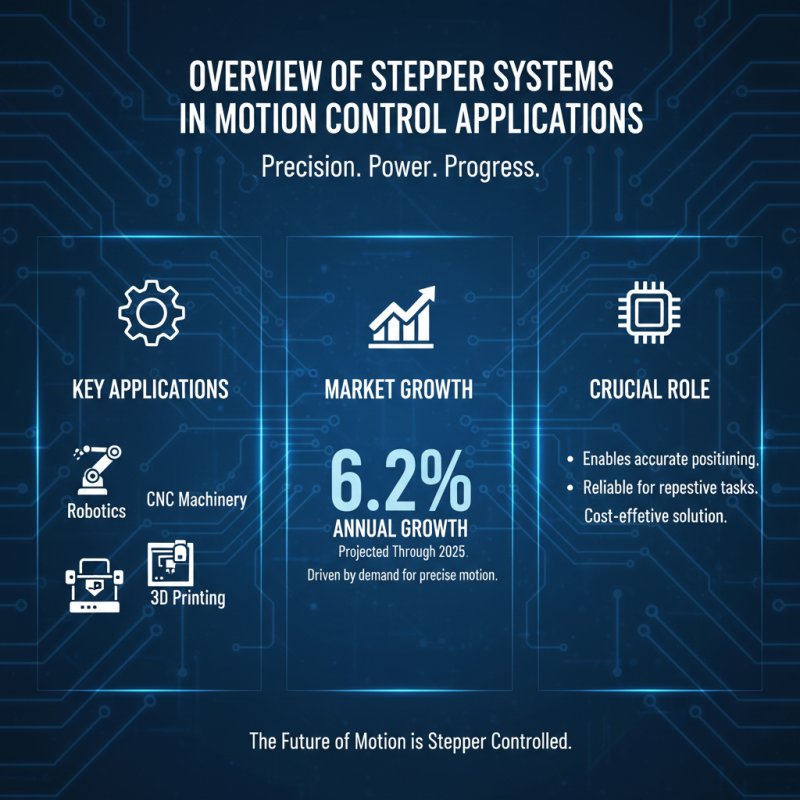
Overview of Stepper Systems in Motion Control Applications
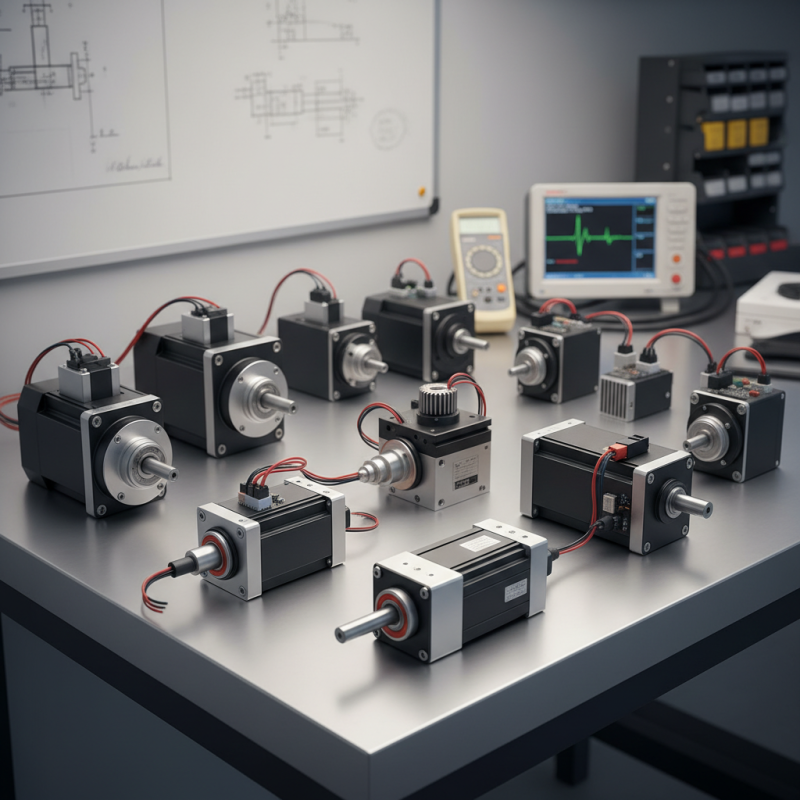
Stepper systems play a crucial role in motion control applications. They are widely used in robotics, CNC machinery, and 3D printing. According to a recent industry report, the market for stepper motors is projected to grow by 6.2% annually through 2025. This growth reflects the increasing demand for precise motion and positioning.
These systems convert electrical energy into mechanical motion with excellent accuracy. However, they come with their own challenges. For instance, stepper motors can experience resonance at certain speeds, leading to performance issues. Additionally, they often lose steps under heavy loads, which can disrupt operations. A recent survey revealed that nearly 30% of users reported such problems in their applications.
Proper engineering and tuning can mitigate these issues. Selecting the right driver and motor combination is essential. Moreover, implementing adequate cooling mechanisms can enhance performance. Despite advancements, many systems still require fine-tuning to reach optimal effectiveness. Understanding the nuances of stepper systems is vital to maximizing their potential.
Key Features to Consider for Optimal Stepper System Performance
When selecting a stepper system, key features are crucial. Precision plays a vital role. The accuracy of stepper motors directly impacts the system's performance. A system that lacks precision can cause misalignment and reduce efficiency.
Torque is another essential feature. The amount of torque generated determines how well your system can handle loads. Insufficient torque might lead to stalling. Each application has unique torque requirements. Analyze yours carefully.
Speed capabilities also matter. A faster system can enhance productivity, but it must be balanced with precision. Sometimes, high speed may compromise accuracy. Experiment with different configurations to find the right balance.
**Tips:**
Choose a system with adjustable settings. This allows fine-tuning for specific tasks. Regular maintenance is vital to keep the system running smoothly. Check the connections and perform periodic calibrations. Ensure your setup is versatile to adapt to changes.
Don't overlook the importance of user interface. A complicated setup can lead to errors and frustrations. Ensure clear instructions and intuitive design. However, even the best systems can face challenges. Be prepared to troubleshoot and rethink your approach.
Top 10 Stepper System Solutions and Their Unique Benefits
When considering stepper systems, understanding their unique benefits is essential. Different configurations can offer distinct advantages in performance. For example, some models provide exceptional torque control, enhancing precision in various applications. Others excel in speed, making them ideal for fast-paced operations.
Tips: Always assess your project requirements before choosing a stepper system. Consider the load and speed needed. A mismatch can lead to inefficiencies. Remember, even the best systems can falter if not used appropriately.
The most effective stepper solutions often feature advanced microstepping technology. This feature significantly reduces vibrations and noise, leading to smoother motion. However, installation can be tricky and requires attention to detail. Mistakes here can compromise performance and accuracy. Balancing performance with ease of use is important for any successful setup.
Tips: Regular maintenance is crucial. Check for wear and tear on belts and gears. Keeping everything lubricated can prolong the life of your system. Don't overlook minor issues; they can escalate quickly.
Comparative Analysis of Leading Stepper Motor Technologies
Stepper motor technologies play a crucial role in automation and robotics. These systems convert electrical pulses into precise mechanical movements. They are essential for applications requiring accuracy and repeatability. Various technologies exist, each with unique advantages and challenges.
Different stepper motor types include permanent magnet, reluctance, and hybrid. Permanent magnet steppers offer higher torque at lower speeds. However, they can struggle with heat dissipation during prolonged use. Reluctance stepper motors are efficient but may lack the torque of permanent varieties. Hybrid motors combine the strengths of both but can be more complex to control.
The choice of technology impacts overall performance. Evaluating requirements is vital before making a decision. For instance, applications needing high-speed performance may benefit from a different motor than those seeking precise position control. Ensuring compatibility with existing systems is important too. Often, solutions may not deliver expected outcomes in real-world conditions. This calls for ongoing evaluation and adaptation in technology deployment.
10 Best Stepper System Solutions For Optimal Performance
| Model |
NEMA Size |
Holding Torque (N·cm) |
Max Step Rate (steps/s) |
Step Angle (degrees) |
Driver Type |
Applications |
| Model A |
NEMA 17 |
45 |
1200 |
1.8 |
Bipolar |
3D Printing, CNC Machining |
| Model B |
NEMA 23 |
70 |
800 |
1.8 |
Unipolar |
Robotics, Automation |
| Model C |
NEMA 17 |
45 |
1000 |
1.8 |
Bipolar |
Textile Machinery, Food Processing |
| Model D |
NEMA 24 |
90 |
600 |
1.8 |
Bipolar |
Medical Devices, Lab Equipment |
| Model E |
NEMA 17 |
50 |
1100 |
Unipolar |
Laser Cutting, Engraving |
Best Practices for Implementing and Maintaining Stepper Systems
Implementing and maintaining stepper systems requires careful attention to detail. One key practice is to ensure proper alignment of the components. Misalignment can lead to uneven performance and increased wear. Regular checks on the setup are essential.
Tips: Always refer to installation manuals. They provide specific instructions for different models. Don't skip this step; it saves time in the long run.
Another consideration is regular maintenance. Clean the system frequently to avoid dust buildup. A clean system performs better and lasts longer. Schedule routine inspections to catch issues early.
Tips: Keep a maintenance log. Track each service performed. This helps identify patterns and potential problems. It’s a great way to spot areas needing improvement.
Sometimes software updates are necessary. Delaying these updates can impact performance. Ensure you check for the latest versions regularly. However, remember that updates may require reconfiguration of settings. Be prepared for this change.
Tips: Test after each update. Assess if there are performance shifts. Small adjustments can make a significant difference in operation.



 Daniel.Ding
 Ding
Ding